The Webcomic Overlook #39: Megatokyo

Have you ever run across something that’s become so incredibly popular that, no matter how much praise is heaped upon it, you are determined to hate it?
Some years ago, I ran across a webcomic, that, overnight, became the toast of the town in both online and print circles. It was mentioned in trade magazines and newspapers. They style was heavily reminiscent of Japanese manga, despite the fact that its creators were American.
At the time, I was an avid anime and manga junkie. Readers on this site who’ve followed me from the defunct Guthwulf.com know that most of my reviews there were about anime series, from Martian Successor Nadesico to His & Her Circumstances to RahXephon. And while my fellow dorks were embracing this new comic, I felt betrayed. Two fellow Americans encroaching on an ineffably Japanese style? How uncreative! Couldn’t these jokers come up with their own style?
Then I heard about the plot: two Americans get stranded in Japan and have to deal with life in a foreign country. That sounded like a misguided otaku fantasy to me. It seemed like it was created by giddy fanboys who think Japan is the greatest country on Earth, refuse to watch any anime unless it’s dubbed, and show up to social events with a wooden katana strapped on their back. I may have been a borderline otaku back in the day, but even then, I knew hardcore otakus were at the very bottom of the geek hierarchy.
Then came the clincher: my little brother liked it. Oh, he’s a cool guy now, but back then he was one of the dorkiest kids imaginable. (He once tried to program his own dating sim until the creepy requests for, um, intimate illustrations of the female protagonists was too much, even for him.)
So that settled it. Under no circumstances was I ever going to read Megatokyo.

But then, over the years, something weird happened. I grew too old for anime, eventually selling off most of my collection on eBay. (I still hold on to Big O, FLCL, and the Excel Saga, though. They’re masterpieces. You do not put a price on a masterpiece.) I began pursuing more noble pursuits … like Monday Night Football! Also, I drifted back toward American comics, since its fans, oddly enough, tended to be more my age.
And at the same time, Megatokyo lost its luster. The story moved too slowly. The series had gotten too dense. There were too many characters. There were grumblings over the artwork and the lack of emotion range that the characters displayed. And then there was the most damning complaint of all: Megatokyo used to be good, but it had gotten so emo lately.
I just knew that, one day, I had to read and review Megatokyo myself. What can I say? I’m the Patron Saint of Lost Causes.*
Here’s a little background on Megatokyo for the people who are fairly new to the world of digital comic books. Megatokyo is one of the elder statesmen of webcomics. The series debuted on August 14, 2000. Megatokyo began as a collaboration between Fred Gallagher and Rodney Caston. However, after a controversial parting of ways, Gallagher became the series’ sole writer and illustrator. It was and still is a very popular webcomic, currently holding the #13 spot on T. Campbell’s March 2008 Alexa rankings.
Megatokyo is also one of the most successful webcomics to appear in print. Mainstream publisher Dark Horse (which is the home of Frank Miller’s Sin City and Mike Mignola’s Hellboy) originally printed the first three volumes of Megatokyo. The comic is now being published by CMX, a division of DC Comics’ Wildstorm Productions (which, in the 90’s, was one of the driving forces in Image Comics with their WildC.A.T.s and Stormwatch titles). Suffice to say, that is some serious publishing clout.
The protagonists of Megatokyo are two clueless college age dudes. Piro is a thinly disguised Fred Gallagher. He’s the one with droopy hair and a permanently lethargic expression. Piro is a big fan of dating sims, and, consequently, is the more sensitive of the two. In a twist that probably has no bearing on the fantasy life of the real life counterpart, Piro is a gifted artist whose talent for drawing the female form has yet to be discovered. For some reason, whenever girls come across his illustrations, they fall madly in love with him instead of reporting him to the Megatokyo version of Chris Hansen.
Ah, Tokyo, you crazy, sexy city.
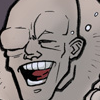
Largo is a thinly disguised Rodney Caston. He’s the one with the poofy hair and the wide smile. Largo loves manly, beef-eating games like Metal Gear Solid. He usually ends up in the wackier stories, like when he encounters giant Rent-a-zillas or fights off zombie hordes… though he is not immune from the charms of the fairer sex. Naturally, he is always hammered. Also, he seems to speak exclusively in (horribly out of date and never cool) leet-speak. He begins to play second fiddle to Gallagher’s Piro when Rodney Caston departs.

Initially, the story is full of absurd circumstances that are pretty typical of anime storylines, but would be the height of stupidity if it happened in the real world. Let’s start with the basics: why can’t Piro or Largo buy tickets to get home? Odd thing, really: it turns out that their credit cards are maxed out. Both of them must also be the saddest orphans in the world, because neither of them have parents that can call Western Union to wire them some cash in a flash. And while their friend will let them stay at his cramped Tokyo apartment, he won’t lend them cash even though, at some point, it’s apparent he’s loaded.
But, you know, that’s par for the course with the plots for most screwball anime manga. Manga gave us fantasy stories where an incompetent nerd can somehow become the manager to an all-girl dormitory in Love Hina and where a motorcycle punk can somehow become a respected teacher in Great Teacher Onizuka. Incidentally, Megatokyo gets off to a similar start in what is probably a direct homage to both series.
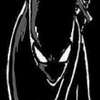
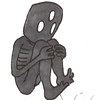
In Piro’s case, the story took on all the markings of a harem style anime. Girls of all ages and types were introduced: the high school girl, the clumsy girl, the creepy goth girl, the Misato-like older woman, the miniature goddess (Seraphim, modeled after Gallagher’s wife) and, yes, the inevitable robot girl. To be fair, Gallagher and Caston seem to know how much of a male fantasy the whole set-up is, like the good otaku that they are. True to form, each of the girls seem to be on the verge of professing their love over the most trivial of things. Kimiko, for example, spends a good long time agonizing over a rail card Piro once gave her.
It’s like a dating sim brought to life!
The parallels, in fact, gets so surreal that right around the time Piro and Largo sit down to eat with Tohya Miho, the goth girl, I was halfway convinced that it would turn out that the two were stuck in a screwed up computer simulation. This Tokyo, after all, always seemed more like a video game world then the genuine artifact, what with giant mecha and magical girls roaming the land. Perhaps Piro was re-enacting a dating sim, and Largo was stuck visualizing the same world as a Resident Evil-style game. Plus Tohya always seemed to be talking in cryptic dialogue about computer parameters and engaging in Matrix-like discussions about cake. Maybe she’s implying that Piro and Largo, are, in fact, simply tomatoes?
I was way off, by the way. The truth of the matter ended up being a little more mundane yet, paradoxically, a little more creepy. (Incidentally, Tohya is one of my favorite characters, and not just because she’s a strange little weirdo. She’s, like, the Batman of Megatokyo.)

Overall, though, I liked Megatokyo. In fact, I liked it so much that I’m going to do something that most of you are not going to agree with. I’m gonna go ahead and give Megatokyo 5 stars, the highest honor The Webcomic Overlook can bestow.
Now, there’s plenty of room for criticism. Here’s a negative review from Websnark’s Eric Burns. And Burns does have a point. In fact, I strongly agree with Mssr. Burns regarding his criticism about how all the women are visually indistinguishable except for the hair. Roommates Erika and Kimiko, the two most prominent females in the series look different mainly because Erika wears her hair up, and Kimiko wears her hair down. At one point, Kimiko had her hair bundled up in a bow, and I mistook her as Erica for a page or two.
His other complaints, about how the series had lost its original sense of wackiness, rings true, too, but only if you’re a fan of that sort of thing. Oh, random absurdity does have its place in the world, but to me it didn’t seem to completely jibe with Gallagher’s soft, pencil-sketch artwork. I know Burns loved how Junpei is bested by Largo in a game of Mortal Kombat. That scene, though, always struck me as hella lame. HELLA LAME!
And speaking of wacky humor: was Largo’s leet-speak ever funny? From what I call, it was lame back then, and today it just seems woefully anachronistic. To me, Megatokyo improved considerably when it did scale back on its crazy hi-jinks and morphed into a romance comic. That’s not to say that we won’t be seeing a random robot now and again. Right now, though, Megatokyo feels more focused.
To address those complaints that Megatokyo has “gone emo”: that’s not entirely fair. That implies that entire comics are spent with Piro writing terrible poetry and Kimiko cutting her wrists. More appropriately, the strip injected a lot of soap opera drama. The Piro/Kimiko relationship gets off the ground faster than it usually does in a typical manga. Going back to Love Hina: by my guesstimate, it took Keitaro and Naru ten whole volumes before the two were officially a couple. The series didn’t last much longer after. Why is that? Because chronicling the struggles in maintaining a working relationship is just not that fun. Wouldn’t you rather see the embarrassed protagonist hook up with a bunch of fine looking ladies and get involved in all sorts of crazy dating hi-jinks and misunderstandings? Hell, even Spider-Man recently had to retcon the Spidey/Mary Jane marriage in part because the editor felt that the free-wheeling, bachelor Peter Parker was more fun than the married one.

But that’s not how things play out in Megatokyo. I felt that Gallagher tackled the more challenging route: going straight to the relationship. It’s the inversion of a harem anime. It breaks Piro out of his fantasy dating sim world and into a more dangerous but more rewarding reality. It saves Kimiko from a reality that would certainly crush her if she didn’t have someone to help her. Their story deals with the struggles, the hardships, and the fine balance between support and independence. The Piro/Kimiko stories may not be Megatokyo at it’s silliest, but it is where the series is closest to the heart.
I asked Fred Gallagher via email what drove him to bring his protagonists together so early in the story. Here was his response:
I was never a big fan of harem style stories, to me I was always more interested in seeing the protagonist focus on one character. Same thing with games – I tended to be loyal to one character in the game to the point that I never liked to ‘play thru’ the other girls. It’s one of the things I really disliked about Sentimental Graffiti – you had to sort of engage all of the girls in some way in order to get to finish with one of them. It’s more a part of my personality, I guess – if you are interested in a girl, it just seems wrong to pursue others along the way.
It’s one of the serious problems I have had with various Anime series based on games. When you play a game, you usually play just one girl’s scenario. For an anime, there is this need to have the main character interested in all the girls at one point or another. It is the biggest (and most annoying) aspect of both anime versions of Kanon (the first one was the worst offender). It seems that in Clannad, a more recent series, there is an inkling that the main character really is mostly interested in the main girl character, which I find a lot more realistic and endearing.
(Incidentally, I also asked him whether his marriage, which occurs around the same time Megatokyo started getting serious, was a large factor in the direction of the story. He assured me it wasn’t; he and his wife Sarah had been in a relationship a long time before the comic started.)
But here’s the main reason why I gave Megatokyo a 5-star ranking: I had initially planned to tackle the series’ 1000+ pages over the span of two to three weeks. What I didn’t count on was how effectively the story would suck me in. I was up until 4 a.m. last Saturday, clicking page after page to see how things would turn out. My girlfriend, by the way, noticed how tired I was the following day. No way in hell I was going to admit that it was because I stayed up all night reading Megatokyo. When she blamed it on too much St. Patty’s Day whiskey, I just nodded my head and grinned like an idiot.
So there you have it. Megatokyo made me act like a brain dead drunk celebrating St. Patrick’s Day. Is there any higher compliment?
I understand that, in a way, Megatokyo appeals to me because I’m a lapsed otaku, and otakus reportedly eat this comic up. Yet, I think if you start reading Megatokyo with the right expectations, you’ll enjoy where the comic is now. It’s not a story about a city where ninjas pop out of nowhere and dinosaurs roam like feral beasts in the street. Not mainly, anyway. Read it for what it is: a sweet take about the struggles and pitfalls of love, with robots thrown in.
Final Grade: 5 stars (out of 5).

*NOTE: St. Jude is usually the one cited as the Patron Saint of Lost Causes. The Patron Saints Index, though, lists four: St. Jude Thaddeus, St. Gregory Thaumaturgus, St. Philomena, and St. Rita of Cascia. This is kinda depressing, since that means there’s an awful lot of lost causes.

Posted on March 21, 2008, in 5 Stars, anime, comedy webcomic, manga style webcomic, romance webcomic, The Webcomic Overlook, WCO Big Review, webcomics and tagged MegaTokyo. Bookmark the permalink. 24 Comments.

































































 The Webcomic Overlook
I’m sorry, I just can’t get past the art. The faces are terrible, and doing things in the anime style is no excuse.
Hell, drawing things in the anime style and sucking isn’t even an excuse. I mean, you can tell all the characters in freaking Naruto apart just by their faces, and half the time Masashi Kishimoto’s art is so bad I have no idea what the hell is going on.
Gallagher’s backgrounds and foregrounds tend to meld together, too, but that doesn’t irritate me as much because it’s a harder problem to fix. It does give me a headache, though.
I’ve occasionally tried to read Megatokyo, but it’s not a comic you can easily jump into from the middle, and I just can’t get past the art. It really, seriously does give me a headache. It’s not awful, but it hurts to look at.
So, you give it five stars, but then say it’s got plenty of room for improvement?
Sigh.
Ratings systems are retarded.
Also, Megatokyo sucks ass, but whatever
I agree, Rusty, ratings are lame.
Every reviewer I’ve come across hates rating systems because any set of numbers or grades never really reflects the true sentiments (which, I hope, is captured in the text of the review). Unfortunately, readers love ratings because they’re a nice shorthand for what’s actually written down, so what can you do?
There’s plenty of room for improvement in Megatokyo, true. But I could also say that about any comic I’ve given five stars to, including Scary Go Round and Lackadaisy.
After all, there’s no such thing as a perfect webcomic. And not everyone’s going to have the same tastes. Inevitably, people like the same comics that, at the same time, I don’t enjoy. And vice versa.
Thus, I can only rate Megatokyo from my own point of view and give enough points and reasons so the reader can for their own conclusion if they want to read the comic or not.
As for the art (Christopher): ah, what can I say, it wasn’t an issue with me. Anime-style art usually turns me off, but I think there’s enough of Gallagher’s own style to be unique in its own right. It’s light and clean, somewhat dreamlike.
Initially, I hated his design for Piro, what with his very punchable mopey face, but eventually it grew on me and I sorta understood why he drew Piro the way he did. It wasn’t because Piro was some sort of emo hero, like I initially assumed.
The art looks ok to me. I don’t hate something because it’s popular, to answer your question. I like to decide based on the work.
I just ran across a copy of Megatokyo, Vol. 5 at the Borders, and I have to say it looks a lot better on paper than it does on the screen (which I didn’t find too terrible in the first place). I’m not sure why, but I’m guessing it’s because black and white art always looks better on something that has grain.
I began Megatokyo one year ago, and I found that his art seriously kicked some ass! And the storyline! Delicious!
Just kidding. Sorry, the guy is really bad at drawing, and the “manga-like” plot seems to be just some lone-guy fantasies.
I know that this thing has plenty of reader. People seems to find some qualities to Megatokyo. But frankly, I don’t know why. I prefer reading Applegeek. Same absurds plots, but with better drawings.
When you have the time, Tim, you might want to check out my review of Applegeeks… though you probably won’t agree with me. At all. 😉
I found MegaTokyo to be less of a lone-guy fantasy than real manga (like “Love Hina,” “Please Teacher,” and “Ah My Goddess). Less women end up throwing themselves at Piro, in any case. (Though I will admit that’s the way it seems in the early chapters; Gallagher more or less drops the harem-style shenanigans around the time he starts doing the webcomic on his own.)
Megatokyo to me lost something special along the way.
The Comic just stopped being funny. I found myself one day that I was no longer actually enjoying Megatokyo, the characters just did not have the same meaning they had so long ago. I found that I was only going there out of habit since the comic came out so many years ago. While I am sad of its downturn I should remember that once I did love this comic and for a long time it did entertain me and I even was first in line at the comic con to get my books signed.
Megatokyo is quite a compelling read when experienced all at once, but it suffers seriously in pace. Because of the two pages a week average, it moves really slowly, and the samey faces can be a real problem when trying to recall a character you last saw 3 months ago (which is just 24 pages). When completed I think it’d be a great archive trawl, but it’s not worth it while it’s still ongoing. And this is from someone with the first 3 books!
Oh please, Megatokyo is the shittiest shit ever shat, and the fans are intolerable. Gallagher himself had to abandon his own IRC channel and forums because his fans drove him nuts, and hides on instant messenger for fear that someone find out. Both characters are thinly disguised ideal-self-inserts in an impossibly inane weaboo plot that would never ever ever happen in real life, and somehow everyone pays this (fat, ugly, old, etc) man’s bills instead of leaving him starving in a gutter somewhere like Darwin intended. Megatokyo is popular for the same reason that /b is popular – Because the internet is full of IDIOTS. In short, if it weren’t for Dominic Deegan, Megatokyo would be the failingest fail to ever fail.
Well, everyone’s entitled to their opinion, Steve. However, I have to say that, in my case anyway, I don’t immediately toss a comic to the curb because the main character is a self-insert (which it is) or the situation wouldn’t happen in real life (which it wouldn’t). Mainly because it’s hard to find creators operating in any media who don’t do the same thing, too.
Not to mention that I hardly find fault in anyone who creates some distance from their fans online. Man, I’d probably be doing the same thing, too, if I was getting the attention Gallagher gets.
I also don’t agree with that last line, but I’ll let that slide since I’ve read more crappy webcomics than a healthy person should be exposed to.
Have you seen the Websnark article by Eric Burns-White? http://www.websnark.com/archives/2004/08/you_had_me_and.html – I like the points he makes in this
Thanks for the link, Vinton! I know this is going to be a little embarrassing, but I actually posted that same link in the review itself. It’s buried in the second paragraph under the third picture. I address his criticisms in the following paragraphs, conceding in some parts, but disagreeing with others.
ok i understand that everyone is intitled to thier opinions but holy hell theres aparrently no one is brave enough to put down a good review of megatokyo. ive read almost every page thats come out on the sit ei havent read in a couple weeks but hey whatever dont judge me. i really enjoy megatokyo yeah at parts it can sometimes suck mainly when dom gets too much air time but if you actually are intrested in the comic then its not hard to distinguish the characters as some of you think i personally think that all of megatokyo is great and if any of you really dont like it that much then why dont you grow some balls and make your own damn webcomic….at least when hes decided that he wante dto do megatokyo he went threw with it and keeps it going despite the incessant nagging of obcessed fans that really do need a life…and during all the shit he does still finds time to make pages for it…
yeah his artwork isnt the best but to those of us who compare it to naruto(which btw isnt a webcomic) i believe that naruto is a pathetic excuse for an anime that should never even have been attempted….i have read some of the manga and watched some of the anime which still to this day i will say that naruto is complete and total shit!…but then again thats just me bitching about anime that should not have been born theres lots of them but none ever as popular as the ever growing naruto…though it may only be popular with kids ages 5-13… anywhos back to MT i love the artwork and his dedication to his work the story can be a little rough but overall it good as far as mostly impromptu storys go…so to all of you who have little or nothing good to say about MT….read somthing else and get over it!
Mr. Santo, as much as I love your other reviews, and they’re all quite honest, I’m not entirely sure some of these deserve a full, five star rating.
I tend to think you’re a bit biased, and some of these comics just baffle me. Like the lolcats one. Why? Did your funny bone break somewhere after Gunshow? Are you the same person that reviewed Dumm Comics? I thought to myself, “Surely this man sees through many facades. He’s not going to let Menage a 3 win him over. Certainly not Boss Noodle.” but then I see this. This.. Thing. This amalgamation of poor choices in all fields. The art that looks like it was drawn on the sides of someone’s biology notes. The characters cemented to a lifeless existence of bored expressions and roles you can see from a mile away. The mere premise illiciting a sea of groans from anyone IN and OUT of the fandom. This comic has all the oldest faults in the book, because it really IS the oldest webcomic. It IS THE BOOK.
I.. I just don’t know anymore. I’m just going to take this review as a momentary lapse of judgment from anime, like some sort of Weaboo’s Tourettes. I’m hoping the others are from slipped bills under the table from the Webcomic Mafia.
It is true. I love animes. Sometimes when someone has a huge bead of sweat some down the side of their head or their nose explodes in blood after seeing cleavage, I sometimes think humor nirvana has been reached. Also gals with saucer eyes make me feel all tingly. It is my blessing and my curse.
Well, I certainly agree with the 5-star rating. I’ve read and enjoyed many webcomics, but this is the only one that’s EVER made me get out my credit card and order the print version, and I don’t have a single regret. Firstly, Gallagher’s artwork is bloody awesome; admittedly, not so much in the first hundred pages (Erika’s first appearance is not even recognisable as the same character) but it gets much, much better as the series progresses. The story is, for me at least, deeply touching and involving. OF COURSE it could never happen in real life; that’s kind of the point. It still has a lot to say that’s relevant to real life. (And that’s the aspect that really drew me in — the depth of its metafictional self-awareness. The interaction between different levels of reality within the comic is a comment, or rather an essay, on our own perception of reality.) The characters — I love them all, except the ones we’re meant to hate. They come across as real people, and I feel real emotions over what happens to them. Do I have any criticisms? Well, I’m disappointed by the slow rate of production, but only because a comic as good as this leaves me gasping for more. And the Gordian knot of a plot has a few too many loose ends — such as the whole sequence of Asmodeus kidnapping Seraphim, which took up way too much time for a thread that led nowhere. Sometimes the characters can be a little too cryptic for my tastes — I prefer it when you can at least understand what they’re saying when you return to earlier pages with hindsight, which is true a lot of the time but not always. Still, as it’s a work in progress, hopefully these loose threads will be brought to a satisfying resolution.
I’ve been reading Megatokyo for probably five or six years now. It was one of the first webcomics I came across along with CAD and PA. However, I’ve gradually given up on both CAD and Megatokyo. I noticed awhile back that I was reading them both out of obligation because I had already invested so much time into them and then I just slowly found skipping updates and going back to catch up after longer and longer intervals and I’ve finally just given up on both of them. I don’t enjoy Megatokyo anymore the storyline has gotten incredibly boring and slow paced to me. I read far more webcomics than is probably healthy these days, but I can’t seem to bring myself to find the time for Megatokyo anymore. most webcomics I eagerly look forward to a new release, Megatokyo had become a routine chore.
You know, having read through most of your reviews I think I agree with you on most of the ratings you have given. This review caught me by surprise though. Megatokyo is not as bad as it’s most virulent detractors make it out to be but it is not a very good comic by any means. I could see maybe 3 stars if you can overlook many of its flaws (I would go 2-2.5), but 5 stars? I know every critic hates rating systems and that said rating systems are flawed but I would think that 1 would be the absolute worst and 5 the absolute best. I really cannot see how Megatokyo joins the head of the class, especially considering the other 5 star reviews here.
I understand that it is impossible to be completely objective in any review of an artistic medium (I am currently in a MFA program and I am just about thoroughly sick of over-analyzing every piece of work done by the hand of man) but I think you are being just a bit too subjective here. Maybe it’s nostalgia goggles (I am in my mid thirties so I remember when this all got started) that are preventing you from being objective enough.
While Megatokyo does not fail on the level of the worst webcomics (Hathor the Cow Goddess anyone?) it does have significant flaws in just about every area. The pacing has slowed down to the point where I fell like I’m slogging through a bog with no reward in sight for one.
As someone who is an artist (I’m not DaVinci but I am certainly capable) the artwork is flat, static and downright ugly at times. Fred Gallagher, while definitely not the worst artist, cannot draw a three-quarters head view without it becoming distorted and very flat. For all that he has drawn over the years his lack of progression on basic art principles is depressing. His pencil work is not minimalist, it is simply lazy. His work, as a whole, strikes me as someone who went in search of a style well before they established any solid foundation or basic understanding of artistic principles. If a house is structurally unsound then painting it up real nice does not solve the underlying problem.
I don’t grade webcomic artists by how pretty they draw, I try to judge them on how their drawings effectively convey their message. Gallagher’s art oftentimes gets in the way of what he is trying to convey.
Also, when you need accoutrements just to able to tell some of the cast apart you are crossing into a bad, bad place. The main gripe I have with Scott Pilgrim, for example, is that he has to write the characters names whenever they appear otherwise we would have no idea who they were.
I know this review is a bit older on your site but I just couldn’t let this go without opening my big, fat mouth. You are certainly entitled to your opinion but as someone who is seriously reviewing a certain medium I feel that you must have some objective criteria to at least get you into a rating range. By any unbiased criteria Megatokyo is simply not on the level of your other 5 star ratings.
There is nothing wrong with enjoying bad music, crappy food or whatever. I still have some awful albums from when I was a teenager and I still enjoy them. I know, however, that they aren’t very good. It’s okay to enjoy bad or mediocre things but to attempt to elevate them to the level of excellence is just plain silly. There, I’ll shut up now.
For whom this may concern or may even ever look at this again, I guess I’ll just leave my foot here in case another person stumbles on this again.
I read MT way back in elementary school and went through a “Manga/Japanese” phase due to my social awkwardness, and my D-Bag of a best friend who at the time, I thought was really cool.
As I grew older I had read a bunch of bad/good manga over the time and many I’ve dropped and killed for the sake of self realization, it was simply breaking a habit. All the while I read MT from day one, and you know what occurred to me? I still liked it, it isn’t the art that drew me in at first, but fell in love (okay a bit strong more like, favor) with, but rather how it went by.
LICD, Penny Arcade, and numerous other famous web comics started somewhere, and it wasn’t the imagery exactly but the content within each page and how we took it that took people for a journey. Many started with art compared to the dripping of a portable in a construction site.
As the story changed and people left, I still found it funny and enjoyable in some little sense, and… While the words I type here are trying to convey something to the world, I’m afraid I can’ quite piece it all in a whole that would be concise and clear. I guess I’ll essentially say that Mega Tokyo may be drawn out but it leaves a piece if you take the time and enjoy a break.
I did the same thing regarding the staying up late reading it. I (finally) started it about three days ago, and am already up to date. I found it engaging, and never noticed the point were Caston left.
Objectively? It may have flat characters (you cannot discount something for self inserts, it does change the quality of the standalone character) or unvaried art, but please don’t be all “I’m so smugly superior. It takes place in Japan, thus I label it weeaboo.” You can give your reasons for not liking it, but please don’t be baffled by people liking it and pretend that quality is something you measure, and others with different opinions are wrong. Annoying commenters aside, thank you (el santo this time) for not following the “hate on established, popular comics” crowd.
I’m sorry, but this a not a five-star comic, even when Caston was with the group. I read the early strips myself and was disappointed.
Pingback: The Webcomic Overlook #114: By Moon Alone « The Webcomic Overlook